

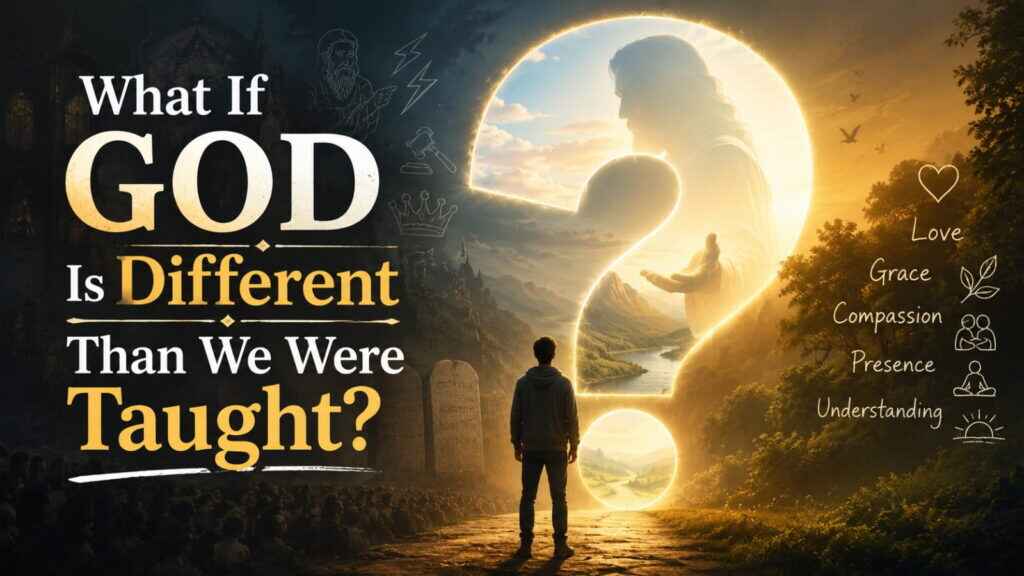
For centuries, people have searched for answers to life’s biggest questions: Who created us? Why are we here? What happens after death? Across cultures, religions, and generations, one idea has remained constant the belief in God. Yet the way we understand God is often shaped by our family, community, religious traditions, and personal experiences.
But what if God is different than we were taught?
This question may feel uncomfortable to some and exciting to others. It does not necessarily reject faith or religion. Instead, it invites us to explore whether our understanding of God is complete, limited, or still evolving. After all, if God is truly infinite, can any human explanation fully capture the divine?
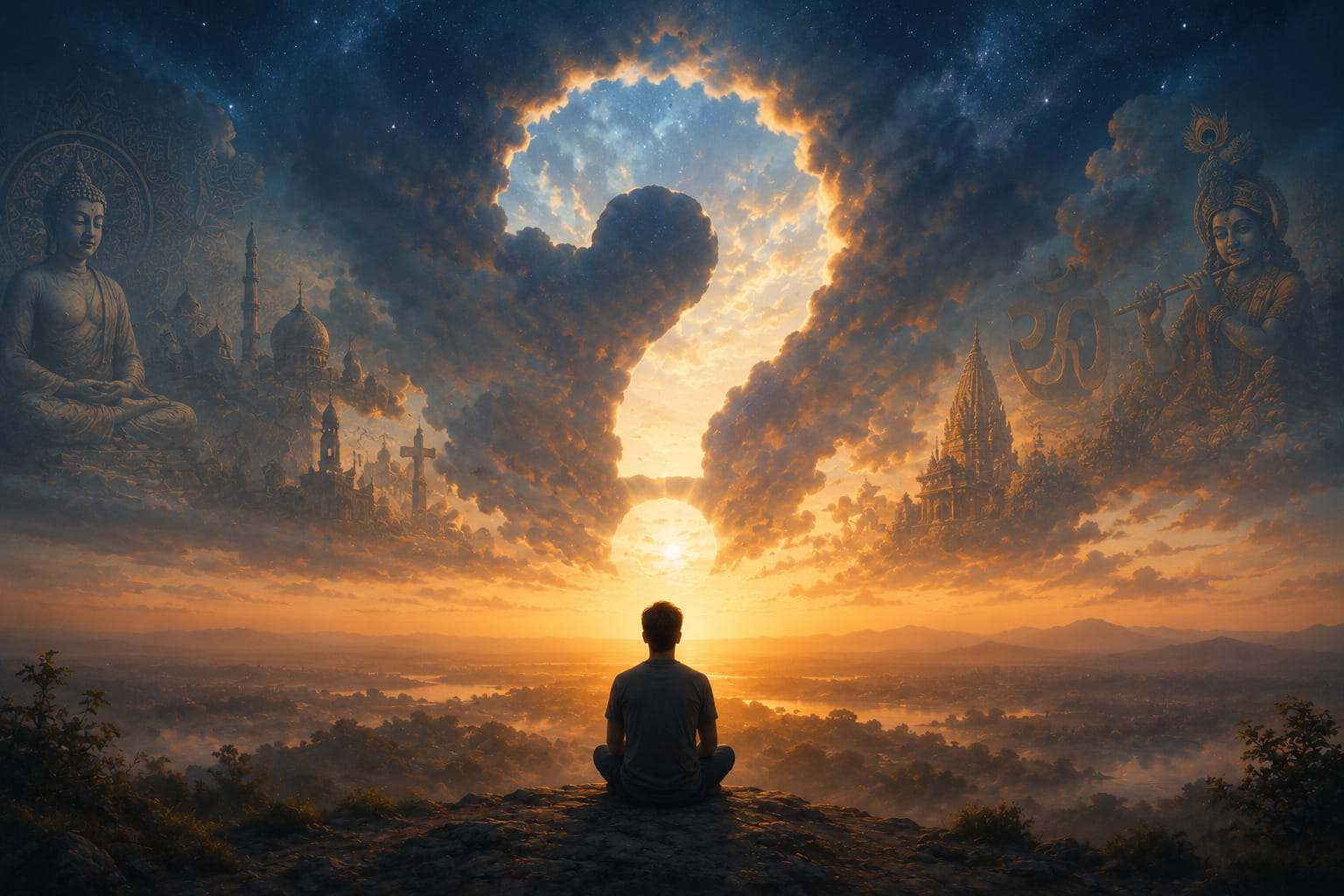
The God We Learn About
Most people receive their first ideas about God during childhood. These beliefs usually come from parents, religious leaders, schools, or cultural traditions. We are taught stories, prayers, rules, and descriptions that help us understand something much greater than ourselves.
For many, these teachings provide comfort, purpose, and moral guidance. They create a foundation for faith and help people navigate life’s challenges.
However, childhood beliefs are often simplified so young minds can understand them. As we grow older and encounter new experiences, we may begin asking deeper questions:
- Why do different religions describe God differently?
- Why does suffering exist?
- Does God intervene in daily life?
- Is God a person, a force, or something beyond human understanding?
These questions do not indicate a lack of faith. They reflect a desire to seek truth more deeply.
Human Understanding Has Limits
One possibility is that our descriptions of God are limited because human understanding itself is limited.
Imagine trying to explain the entire ocean using only a glass of water. The water is real, but it cannot represent the vastness of the ocean. Similarly, our concepts of God may be accurate in some ways while still being incomplete.
Throughout history, people have interpreted divine experiences through the language and knowledge available to them. Ancient civilizations viewed the world differently than modern societies. As science, philosophy, and culture evolved, so did many people’s understanding of spirituality.
This does not necessarily mean previous teachings were wrong. It may simply mean they captured only part of a much larger reality.
What If God Is More Loving Than We Imagine?
Many people grow up with images of a God who is constantly judging, punishing, or keeping score of every mistake. While accountability is an important concept in many faith traditions, some individuals eventually wonder whether God’s love is even greater than they were taught.
If God created humanity, would divine love be deeper than human love?
Parents often forgive their children despite mistakes. Friends show compassion during difficult times. If human beings are capable of mercy, perhaps God’s mercy is beyond anything we can fully comprehend.
This perspective has led many people to focus less on fear and more on love, kindness, and personal transformation in their spiritual journeys.
What If God Is Beyond Religion?
Religion has helped billions of people connect with the divine. It provides community, tradition, and spiritual guidance. Yet some individuals feel that God cannot be contained within a single system, denomination, or set of doctrines.
Many religious traditions share surprisingly similar values:
- Compassion
- Honesty
- Forgiveness
- Service to others
- Respect for life
This raises an interesting question: What if God is larger than any single human description?
Rather than seeing different faiths as competing versions of truth, some people view them as different paths toward understanding the same ultimate reality. While beliefs may differ, the search for meaning often unites humanity.
What If God Speaks Through More Than Words?
People often expect God to communicate through sacred texts, prayers, or religious leaders. While these remain important for many believers, others report experiencing the divine in unexpected ways.
Some feel a connection to God through:
- Nature
- Music
- Acts of kindness
- Meditation
- Personal reflection
- Moments of profound peace
Standing beneath a sky full of stars or witnessing extraordinary compassion can create a sense of wonder that feels spiritual. These experiences remind us that the divine may be encountered in everyday life, not only in formal religious settings.
Faith and Questions Can Coexist
A common misconception is that questioning beliefs weakens faith. In reality, many spiritual traditions encourage honest inquiry.
Some of history’s most influential thinkers, philosophers, and religious leaders wrestled with doubt, uncertainty, and difficult questions. Their willingness to seek deeper understanding often strengthened rather than destroyed their faith.
Questioning allows beliefs to mature. Instead of accepting ideas simply because they were inherited, people develop convictions based on personal reflection, experience, and understanding.
Faith does not always mean having every answer. Sometimes it means continuing the search even when answers remain incomplete.
A More Personal Relationship With God
If God is different than we were taught, discovering that difference may require a personal journey rather than relying solely on secondhand information.
This journey may involve:
- Studying different perspectives
- Reflecting on personal experiences
- Practicing prayer or meditation
- Having honest conversations
- Exploring spiritual teachings with an open mind
The goal is not necessarily to abandon existing beliefs. Instead, it is to understand them more deeply and determine what resonates with personal experience and truth.
Many people find that their relationship with God becomes more meaningful when it moves beyond rules and rituals into genuine connection.
The Mystery May Be Part of the Answer
Perhaps one of the most important possibilities is that God remains, to some extent, a mystery.
Human beings naturally seek certainty, yet the greatest realities in life love, consciousness, beauty, and existence itself often contain elements that cannot be fully explained.
If God is the source of all creation, it may be unrealistic to expect complete understanding. Instead, spirituality may involve balancing knowledge with humility, recognizing that there is always more to discover.
The mystery of God does not have to be frustrating. For many, it is what makes the spiritual journey meaningful.
Conclusion
The question, “What if God is different than we were taught?” is not an attack on faith. It is an invitation to think, explore, and grow. Whether our understanding changes slightly or dramatically, the search itself can lead to greater wisdom, compassion, and self-awareness.
Perhaps God is more loving, more mysterious, and more expansive than any single belief system can fully describe. Perhaps every generation uncovers new layers of understanding. Or perhaps the journey of seeking God is just as important as the answers we find.
In the end, asking questions does not move us further from the divine. Sometimes, it is the very thing that brings us closer.