

In an age of unprecedented technological advancement, instant communication, and access to information, many people would assume that humanity feels more connected than ever before. Yet despite living in a world filled with convenience and opportunity, countless individuals report feeling spiritually lost, disconnected, and uncertain about life’s deeper meaning.
This feeling is not limited to any particular age group, culture, or religion. Young adults searching for purpose, professionals achieving career success, and even those surrounded by family and friends often describe an inner emptiness that material accomplishments alone cannot fill.
So why do so many people feel spiritually lost today? The answer is complex, involving cultural shifts, modern lifestyles, changing beliefs, and the universal human desire for meaning and connection.
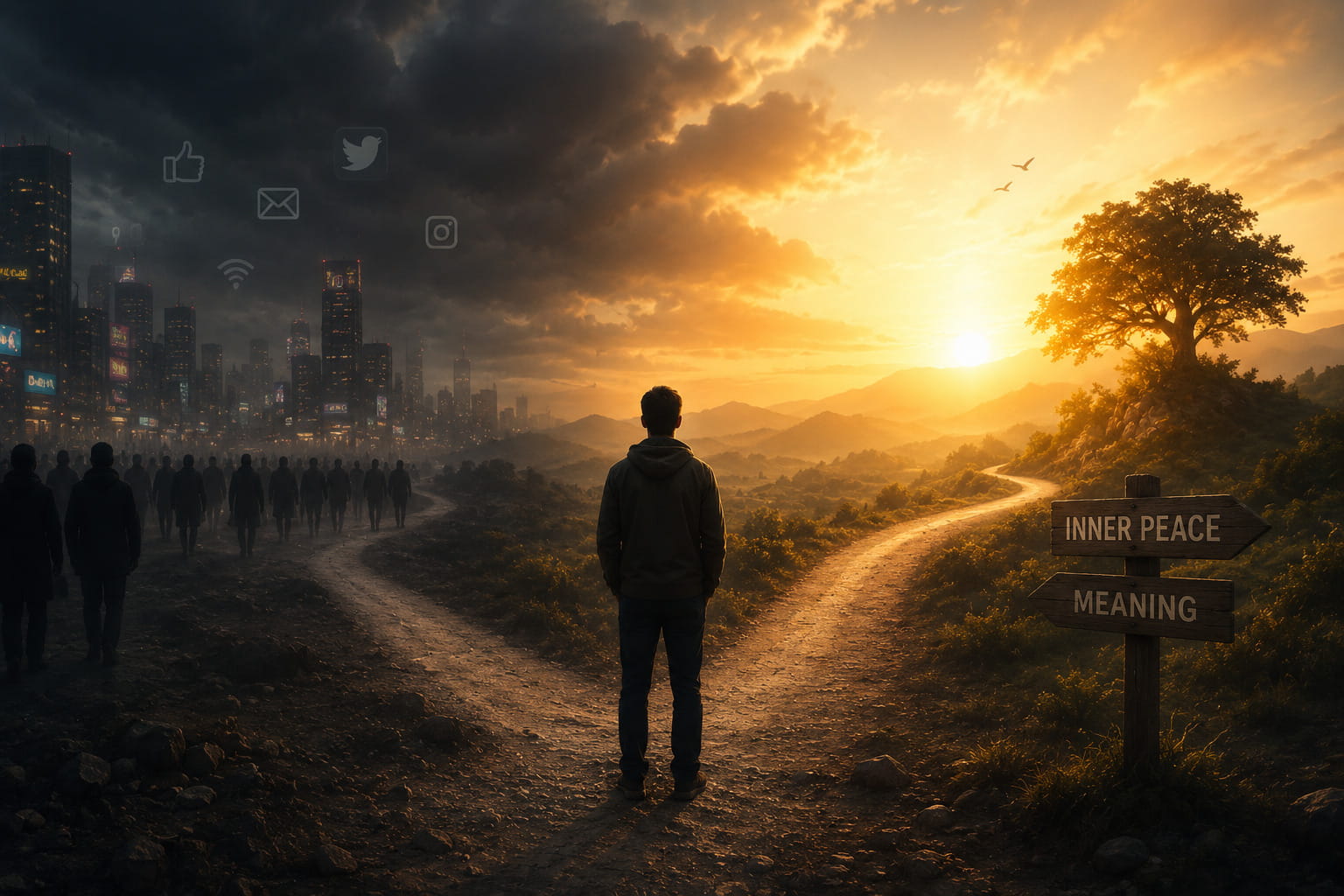
The Search for Meaning Has Never Disappeared
Throughout history, human beings have asked profound questions:
- Why am I here?
- What is the purpose of life?
- What happens after death?
- Is there something greater than myself?
- How should I live?
These questions form the foundation of spirituality. Regardless of religious beliefs, people naturally seek meaning beyond daily survival.
In earlier generations, religion, community traditions, and shared cultural values often provided clear answers. Today, many individuals have more freedom to choose their beliefs, but that freedom can also create uncertainty.
When there are countless perspectives available, finding a clear sense of purpose can become more challenging.
The Rise of a Fast-Paced Lifestyle
Modern life moves at an extraordinary speed.
People spend their days managing work responsibilities, family obligations, financial pressures, social commitments, and endless digital notifications. Every moment seems filled with activity.
While productivity can be beneficial, constant busyness often leaves little time for reflection.
Spiritual growth typically requires moments of stillness, self-examination, and contemplation. Yet many people rarely experience uninterrupted silence. Instead, they move from one task to another without stopping to consider what truly matters to them.
As a result, individuals may achieve external success while feeling internally disconnected.
Technology and Digital Overload
Technology has transformed the way people live, work, and communicate. Smartphones and social media allow us to stay connected instantly, but they can also contribute to feelings of spiritual disconnection.
Many people spend hours scrolling through content, comparing themselves to others, and consuming information at a rapid pace.
This constant stimulation creates several challenges:
- Reduced attention spans
- Increased anxiety
- Comparison with others
- Less time for self-reflection
- Difficulty being present in the moment
When attention is continuously directed outward, it becomes harder to connect with one’s inner life.
Spirituality often flourishes through awareness, mindfulness, and introspection qualities that can be difficult to cultivate in an environment of constant distraction.
Declining Sense of Community
For centuries, communities played a major role in people’s spiritual lives.
Whether through religious gatherings, cultural traditions, neighborhood connections, or extended families, individuals often felt part of something larger than themselves.
Today, many societies have become more individualistic. People move frequently, work remotely, and spend less time participating in community activities.
While independence offers many benefits, it can also increase feelings of isolation.
Humans are social beings who thrive on meaningful relationships. When connections weaken, people may begin feeling disconnected not only from others but also from a deeper sense of belonging.
Material Success Doesn’t Always Create Fulfillment
Modern culture often emphasizes achievement, wealth, status, and personal success.
From a young age, many people are encouraged to pursue good grades, successful careers, financial security, and professional recognition. These goals are valuable and can improve quality of life.
However, many individuals discover that achieving external success does not automatically create inner fulfillment.
Someone may have:
- A good salary
- A comfortable home
- Career accomplishments
- Social recognition
Yet still feel empty inside.
This experience can be confusing because society often suggests that happiness will arrive once certain milestones are reached. When those milestones fail to provide lasting satisfaction, people may begin questioning what is missing.
Often, the missing element is a deeper sense of purpose and connection.
Loss of Shared Beliefs and Traditions
In many parts of the world, traditional belief systems have become less influential than they once were.
For some people, this shift provides freedom to explore different perspectives. For others, it creates uncertainty.
Previous generations often inherited a clear worldview from their families and communities. Today, individuals are exposed to countless philosophies, religions, scientific perspectives, and cultural influences.
While diversity of thought is valuable, it can also make it difficult to establish a stable spiritual foundation.
Without a framework for understanding life’s deeper questions, some people feel adrift and unsure where to turn.
The Impact of Stress and Anxiety
Mental and emotional stress can significantly affect spiritual well-being.
Economic uncertainty, global conflicts, health concerns, relationship challenges, and workplace pressures create ongoing stress for many individuals.
When people are focused on immediate survival or problem-solving, spiritual questions may be pushed aside.
Over time, however, unresolved stress can lead to feelings of emptiness, burnout, and disconnection.
Many people who describe themselves as spiritually lost are not necessarily lacking faith or beliefs. Instead, they may be overwhelmed by life’s demands and unable to nurture their inner lives.
The Desire for Authenticity
Another reason people feel spiritually lost is that they are searching for something genuine.
Many individuals no longer accept beliefs simply because they were taught to do so. They want personal understanding and authentic experiences.
This desire is not necessarily negative.
In fact, questioning inherited beliefs can lead to deeper growth and self-awareness. However, the journey can feel confusing and lonely.
When old beliefs no longer provide certainty and new answers have not yet been found, people often experience a period of spiritual searching.
Although uncomfortable, this phase is frequently part of personal transformation.
Spiritual Loss Can Be Part of Spiritual Growth
Interestingly, feeling spiritually lost is not always a sign that something is wrong.
Many spiritual traditions describe periods of uncertainty as natural stages of growth.
During these times, people may:
- Question long-held beliefs
- Reevaluate priorities
- Explore new perspectives
- Seek deeper understanding
- Develop greater self-awareness
Just as physical growth involves change and discomfort, spiritual growth often requires moving beyond old assumptions.
What feels like being lost may actually be the beginning of a more authentic spiritual journey.
Reconnecting With Spiritual Purpose
While there is no single solution, many people find renewed spiritual connection through simple practices such as:
Reflection and Silence
Spending time alone without distractions can help individuals reconnect with their thoughts, values, and deeper questions.
Meditation and Mindfulness
These practices encourage presence, awareness, and inner peace.
Nature
Many people experience a sense of wonder and connection while spending time outdoors.
Service to Others
Helping others often creates meaning and reminds individuals that they are part of something larger than themselves.
Honest Exploration
Reading, learning, asking questions, and engaging with different perspectives can help people develop a spiritual path that feels authentic and meaningful.
Conclusion
So why do so many people feel spiritually lost today?
The answer lies in a combination of factors: fast-paced lifestyles, digital distractions, weakened community connections, cultural changes, material pressures, and the ongoing search for authentic meaning.
Yet feeling spiritually lost is not necessarily a failure. In many cases, it reflects a deep human desire to understand life beyond surface-level achievements and daily routines.
The longing for purpose, connection, and inner peace remains as strong today as it has been throughout history. While the paths people choose may differ, the search itself is universal.
Perhaps the feeling of being spiritually lost is not the end of the journey. Instead, it may be the first step toward discovering a deeper, more meaningful connection with ourselves, with others, and with whatever we believe lies beyond us.