

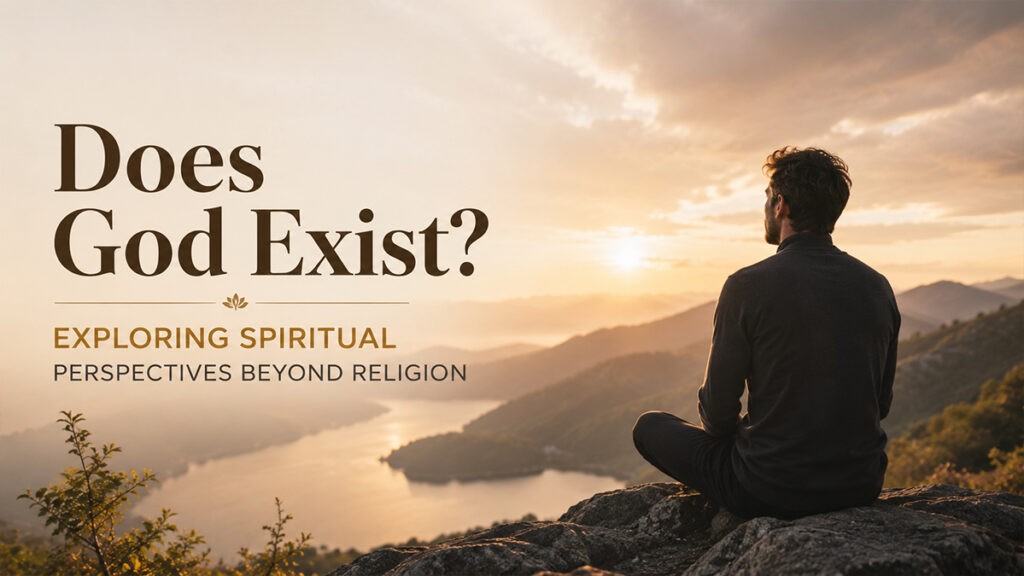
One of Humanity’s Oldest Questions
For thousands of years, people have asked one of life’s biggest questions:
Does God exist?
There isn’t a single answer that satisfies everyone. Across cultures, religions, philosophies, and scientific communities, people have explored this question from different perspectives.
Some believe in a personal God who guides and loves humanity. Others see God as universal consciousness, the creative force of nature, or the energy that connects all living things. Some remain uncertain, while others choose not to believe in God at all.
At GodsYou, we believe that asking meaningful questions is an important part of every spiritual journey. Rather than telling you what to believe, we encourage curiosity, reflection, and personal exploration.
Whether you’re beginning your spiritual journey or searching for a deeper understanding, this guide explores different ways people think about God and how those perspectives can inspire a more meaningful life.
Quick Answer: Does God Exist?
Whether God exists depends on personal beliefs, experiences, faith, philosophy, and interpretation. While there is no universally accepted proof, billions of people believe in God through personal experiences, spiritual practice, and religious faith, while others explore spirituality without defining God in a traditional way.
Why Do People Ask This Question?
Questions about God often arise during important moments in life.
You may ask:
- Why am I here?
- What happens after death?
- Is there a purpose to life?
- Why do suffering and joy both exist?
- Is there something greater than ourselves?
These questions are not signs of doubt—they are often signs of growth.
Seeking answers is a natural part of human curiosity.
Different Ways People Understand God
One reason this question has so many answers is that people define “God” differently.
God as a Personal Being
Many people believe God is:
- Loving
- Wise
- Compassionate
- Creator of the universe
- Personally involved in human lives
This understanding is common in many religious traditions around the world.
God as Universal Consciousness
Others describe God as:
- Universal energy
- Infinite consciousness
- Divine intelligence
- The source of all life
Instead of imagining God as a person, they experience God as the presence that connects everything in existence.
God Through Nature
Some people feel closest to God when they experience nature.
Watching a sunrise, standing beside the ocean, or walking through a forest can inspire feelings of awe, peace, and connection.
For them, nature reflects something sacred.
God Within
Many spiritual traditions teach that the divine exists within every person.
This perspective encourages people to discover God through:
- Compassion
- Love
- Kindness
- Meditation
- Self-awareness
Instead of searching outside themselves, they begin looking inward.
What Does Science Say About God?
Science and spirituality often ask different kinds of questions.
Science explores:
- How the universe works
- Physical laws
- Observable evidence
- Measurable phenomena
Spirituality explores:
- Meaning
- Purpose
- Consciousness
- Personal experience
- Inner transformation
Many scientists believe in God.
Many do not.
Likewise, many spiritual people value scientific discovery while also embracing faith and personal experience.
Rather than competing, science and spirituality can offer different perspectives on the same universe.
Can You Be Spiritual Without Believing in God?
Absolutely.
Many people identify as spiritual but not religious.
They practice:
- Meditation
- Mindfulness
- Gratitude
- Compassion
- Personal growth
- Reflection
Their spirituality focuses on becoming a better person and living with greater awareness rather than following a specific belief about God.
Why Billions of People Believe in God
People often describe experiences that strengthen their faith.
Some mention:
- A sense of peace during difficult times
- Feeling guided in life
- Answered prayers
- Deep meditation experiences
- Connection during worship
- Personal transformation
While these experiences cannot always be scientifically measured, they are deeply meaningful to those who experience them.
Why Some People Question God’s Existence
Others approach life differently.
They may ask:
- Why is there suffering?
- Why can’t God be directly observed?
- Why do religions differ?
- Is belief based on culture?
These are thoughtful questions.
Exploring them respectfully helps create meaningful conversations rather than arguments.
What Matters Most?
Whether you believe in God as a personal being, universal consciousness, or remain uncertain, many spiritual traditions emphasize similar values:
- Love
- Compassion
- Forgiveness
- Gratitude
- Kindness
- Service
- Humility
- Hope
Living these values often has a positive impact on individuals and communities regardless of personal beliefs.
Finding Your Own Understanding
No one else can define your spiritual journey for you.
Instead of rushing toward answers, consider asking yourself:
- What brings me peace?
- When do I feel most connected?
- What values guide my life?
- How do I want to treat others?
- What gives my life meaning?
These questions often lead to deeper understanding over time.
How Spiritual Practices Can Help
Whether or not you’ve decided what you believe about God, spiritual practices can encourage reflection and personal growth.
You might explore:
Meditation
Meditation helps quiet mental distractions and increase self-awareness.
Gratitude
Practicing gratitude shifts attention toward appreciation and abundance.
Journaling
Writing about your thoughts creates clarity and encourages honest self-reflection.
Nature
Spending time outdoors often inspires awe and mindfulness.
Learning
Reading spiritual books, joining discussions, or taking online classes can introduce new perspectives while helping you discover your own.
Spiritual Beliefs Around the World
Although cultures describe God differently, many share common themes.
Across the world, people seek:
- Meaning
- Connection
- Purpose
- Hope
- Inner peace
- Love
These shared aspirations remind us that spirituality often unites people more than it divides them.
How GodsYou Supports Spiritual Exploration
At GodsYou, we believe spirituality should be welcoming, respectful, and open to everyone.
We don’t tell you what to believe.
Instead, we provide resources that help you ask meaningful questions, develop self-awareness, and explore spirituality at your own pace.
Whether you’re curious about meditation, personal growth, mindfulness, or understanding different perspectives about God, you’ll find opportunities to learn through:
- Online spiritual classes
- Guided meditation sessions
- Spiritual awakening courses
- Retreats focused on personal growth
- Educational articles and community discussions
Every journey begins with curiosity, and every question has the potential to lead to greater wisdom.
Final Thoughts
So, does God exist?
Only you can decide what that question means for your life.
Some people discover God through religion.
Others through meditation.
Some through acts of kindness.
Others through nature, relationships, or quiet moments of reflection.
The most important part of the journey isn’t having every answer.
It’s remaining open, curious, compassionate, and willing to grow.
At GodsYou, we invite you to continue exploring your spirituality, asking meaningful questions, and discovering a deeper connection with yourself and the world around you.