


Are You Busy… or Just Constantly Distracted?
When someone asks, “How have you been?” many of us automatically reply:
“Busy.”
It’s become one of the most common answers in modern life.
Our calendars are full.
Our phones never stop buzzing.
There are emails to answer, meetings to attend, responsibilities to manage, and endless notifications demanding our attention.
From the outside, staying busy often looks like success.
But beneath the surface, many people are asking a different question:
“Why do I feel exhausted, disconnected, and like I’m missing my own life?”
At GodsYou, we believe that being busy isn’t the same as living meaningfully. Sometimes the greatest transformation begins not by doing more but by learning to slow down.
Quick Answer: Why Is Constant Busyness Harmful?
Constant busyness can lead to stress, emotional exhaustion, burnout, strained relationships, and a loss of connection with yourself. Slowing down through mindfulness, meditation, and intentional living allows you to reduce mental overload, improve well-being, and rediscover joy in everyday life.
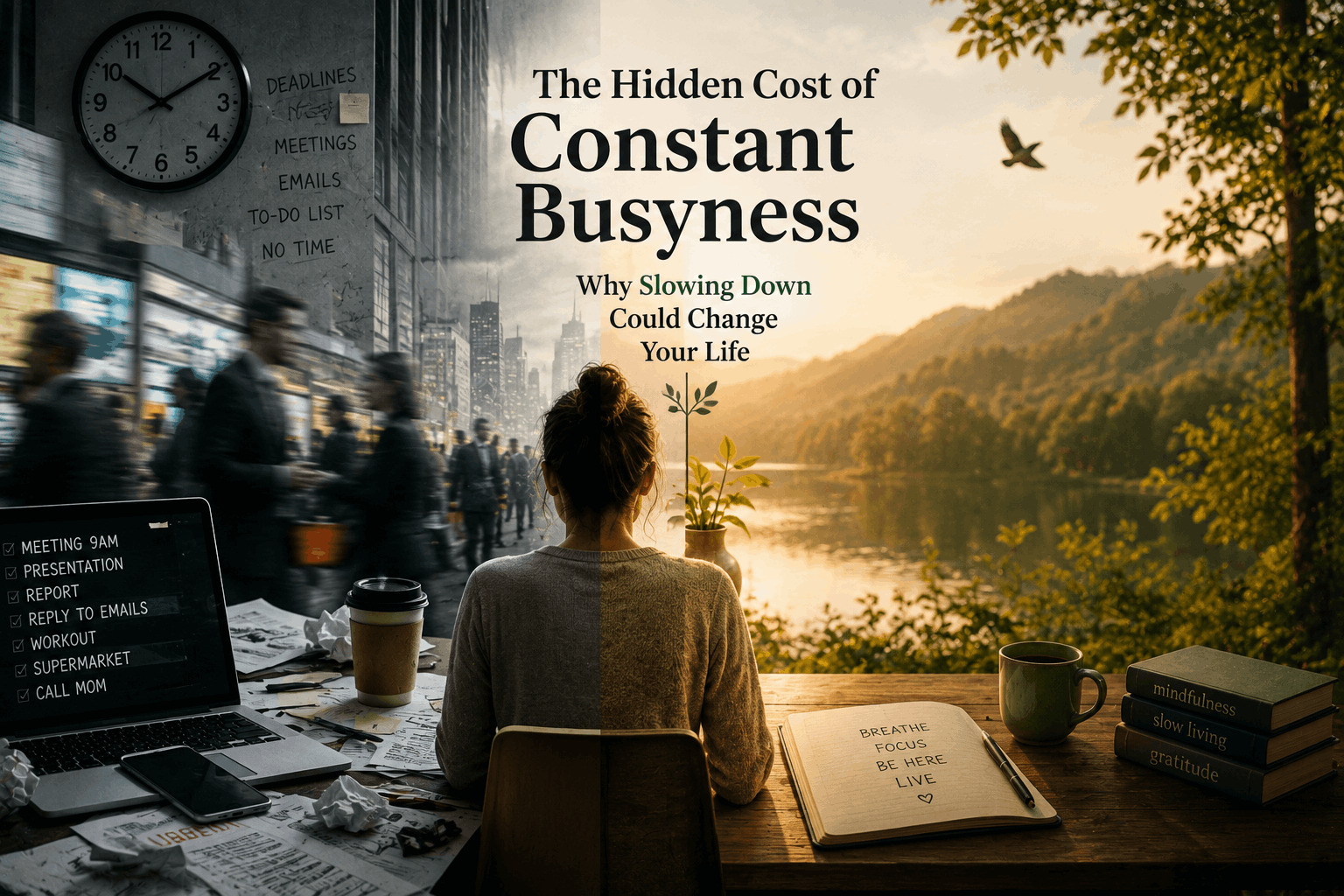
When Did Being Busy Become a Badge of Honor?
Society often celebrates people who are always working.
We admire those who:
- Answer emails late at night
- Never take vacations
- Constantly multitask
- Fill every hour of the day
Productivity is valuable.
But when your worth becomes tied to how busy you are, life can start feeling like an endless race.
Many people don’t know how to rest without feeling guilty.
That isn’t balance.
It’s burnout waiting to happen.
The Hidden Cost of Constant Busyness
Being busy doesn’t only affect your schedule.
It affects your mind, your relationships, and your overall quality of life.
1. You Stop Living in the Present
When you’re always thinking about the next task, it’s difficult to appreciate what’s happening right now.
You may miss:
- Family conversations
- Beautiful sunsets
- Quiet mornings
- Meaningful friendships
- Small moments of happiness
Life continues while you’re planning for tomorrow.
2. Your Mind Never Gets a Break
The brain wasn’t designed for nonstop stimulation.
Constant busyness often leads to:
- Mental fatigue
- Difficulty concentrating
- Decision fatigue
- Irritability
- Emotional exhaustion
Even when you’re sitting still, your mind may still be racing.
3. Relationships Begin to Suffer
Busyness often steals our attention from the people who matter most.
Being physically present isn’t the same as being emotionally present.
Loved ones don’t simply want your time.
They want your attention.
4. You Lose Touch With Yourself
When life becomes one long checklist, it’s easy to forget questions like:
- What makes me happy?
- What inspires me?
- What do I truly value?
Busyness often disconnects us from our inner world.
5. You Mistake Productivity for Purpose
Checking tasks off a list feels satisfying.
But productivity isn’t the same as fulfillment.
You can accomplish a lot while still feeling empty inside.
Purpose comes from living intentionally not simply staying occupied.
Why We Find It So Hard to Slow Down
Many people aren’t afraid of being busy.
They’re afraid of what they’ll feel when everything becomes quiet.
Silence often brings thoughts we’ve been avoiding.
Questions about:
- Purpose
- Relationships
- Happiness
- Identity
Rather than facing those questions, we stay busy.
But healing begins when we’re willing to listen.
The Difference Between Being Busy and Being Present
| Being Busy | Being Present |
| Always rushing | Moving with intention |
| Constant multitasking | Focus on one moment |
| Chasing deadlines | Appreciating the journey |
| Reacting to life | Living consciously |
| Feeling overwhelmed | Feeling grounded |
Presence doesn’t require more time.
It requires more awareness.
How Slowing Down Can Transform Your Life
Slowing down doesn’t mean becoming unproductive.
It means becoming intentional.
Here are practical ways to begin.
1. Start Your Morning Without Your Phone
Instead of reaching for your notifications immediately, spend the first few minutes of your day with yourself.
Try:
- Deep breathing
- Gratitude
- Stretching
- Meditation
- Journaling
How you begin your morning often shapes the rest of your day.
2. Practice Mindful Breathing
Several times each day, pause.
Take three slow breaths.
Notice:
- Your body
- Your surroundings
- Your thoughts
This simple habit helps reset your nervous system.
3. Schedule Time for Nothing
Not every hour needs to be productive.
Create space for:
- Reading
- Walking
- Reflection
- Rest
- Creativity
Sometimes your best ideas appear when you’re doing less.
4. Spend More Time in Nature
Nature naturally slows our pace.
Whether it’s a park, beach, forest, or garden, spending time outdoors reminds us that growth happens gradually.
Trees don’t rush.
Neither should we.
5. Learn to Say No
Every “yes” is also a “no” to something else.
Protect your energy by asking:
- Is this aligned with my values?
- Do I truly have time?
- Am I saying yes because I want to or because I feel obligated?
Healthy boundaries create healthier lives.
6. Practice Daily Gratitude
Busyness often focuses on what’s next.
Gratitude reminds you of what’s already here.
Every evening, write down three things you appreciated today.
Over time, this simple practice changes how you see your life.
7. Make Meditation Part of Your Routine
Meditation helps you slow down internally, even when life remains busy.
Just 10 minutes a day can help you:
- Feel calmer
- Think more clearly
- Improve emotional resilience
- Become more present
The goal isn’t to stop thinking.
It’s to stop being controlled by every thought.
What Happens When You Slow Down?
People who intentionally create space in their lives often notice:
- Better relationships
- Improved focus
- Less stress
- Greater creativity
- More gratitude
- Better sleep
- Increased emotional balance
- A stronger sense of purpose
Most importantly, they begin experiencing life instead of constantly rushing through it.
Slowing Down Is a Spiritual Practice
Many spiritual traditions teach that peace isn’t found by doing more.
It’s found by becoming more aware.
Spirituality encourages us to:
- Be fully present
- Appreciate simple moments
- Listen deeply
- Live intentionally
- Trust the journey
When we slow down, we notice things we previously overlooked:
A smile.
A conversation.
The sound of birds.
The warmth of sunlight.
These small moments often become life’s greatest treasures.
How GodsYou Can Help You Live More Mindfully
At GodsYou, we believe spiritual growth isn’t about escaping everyday life.
It’s about learning how to experience everyday life with greater awareness, peace, and purpose.
Whether you’re feeling overwhelmed by constant busyness or simply looking for a more meaningful way to live, our resources are designed to support your journey.
Explore:
- Guided meditation sessions
- Online spiritual classes
- Spiritual awakening courses
- Personal growth retreats
- Articles on mindfulness, gratitude, and intentional living
Every step toward mindfulness is a step toward a more fulfilling life.
Final Thoughts
Modern culture often tells us to keep moving faster.
But your heart may be asking something different.
To slow down.
To breathe.
To reconnect.
You don’t need to change your entire life overnight.
Begin with one quiet moment.
One mindful breath.
One walk without your phone.
One conversation where you’re fully present.
Life isn’t measured by how busy you were.
It’s measured by how deeply you experienced it.
At GodsYou, we’re here to help you slow down, reconnect with yourself, and build a life centered on peace, purpose, and authentic joy.
Sometimes the life you’ve been searching for isn’t somewhere else.
It’s waiting in the moments you’ve been too busy to notice.