

For many people, spirituality and religion seem inseparable. Religious traditions often provide the structure, teachings, and practices through which individuals connect with something greater than themselves. Yet in recent years, an increasing number of people describe themselves as “spiritual but not religious.” This growing trend raises an important question: Can spirituality exist without religion?
The answer depends largely on how we define both spirituality and religion. While they are closely connected for many individuals, they are not necessarily the same thing. Exploring the relationship between the two can help us better understand the diverse ways people seek meaning, purpose, and connection in their lives.
Understanding Religion and Spirituality
Religion is typically an organized system of beliefs, practices, rituals, and moral teachings centered around faith in a higher power or divine reality. Religions often have sacred texts, places of worship, established traditions, and communities of believers.
Spirituality, on the other hand, is generally more personal and individual. It involves the search for meaning, purpose, inner peace, and connection with something greater than oneself. For some people, that connection may be with God. For others, it may involve nature, humanity, the universe, or a deeper sense of consciousness.
Although religion can be a pathway to spirituality, spirituality does not always require religious affiliation. Many people pursue spiritual growth outside traditional religious frameworks.
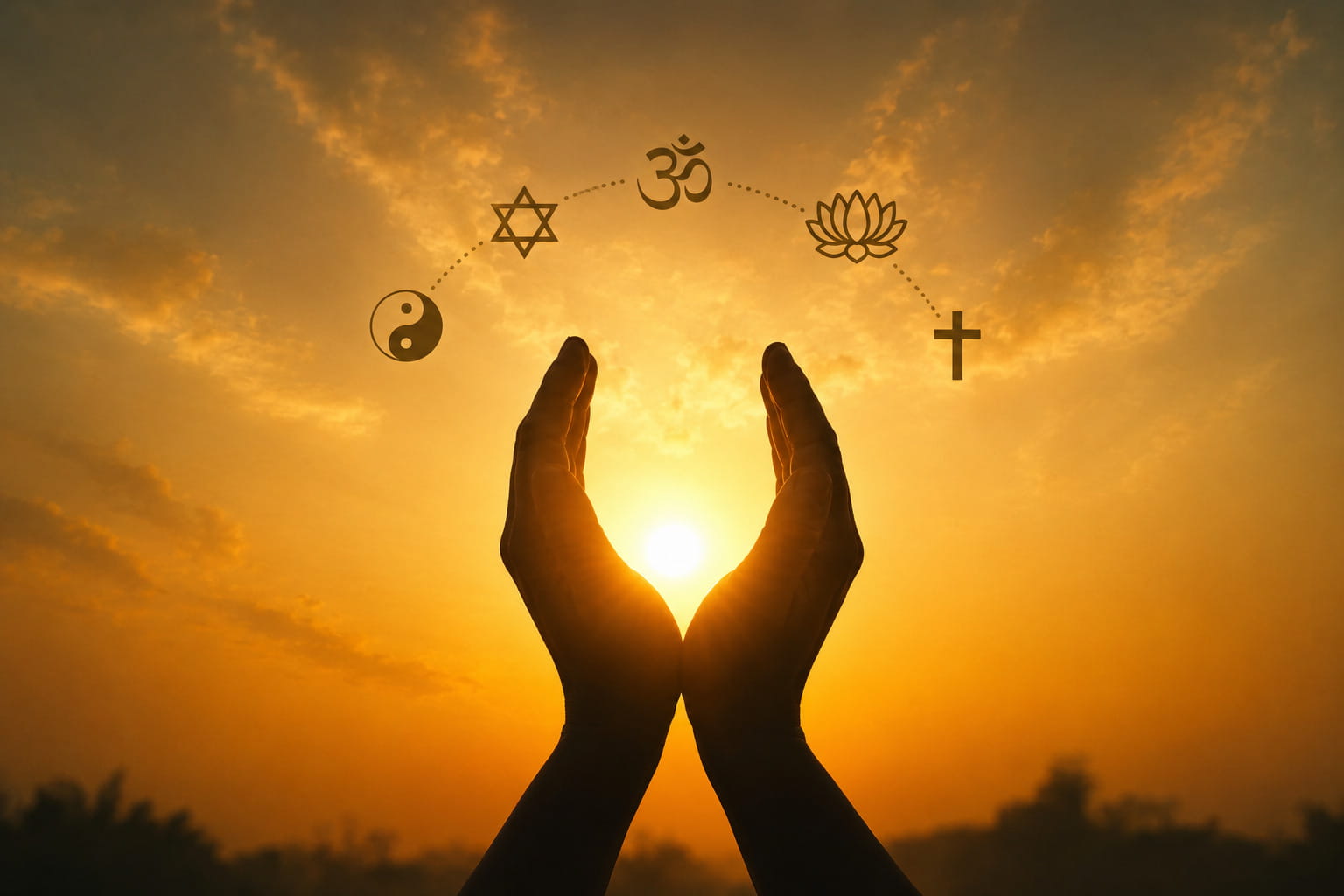
Why Some People Separate Spirituality From Religion
There are several reasons why individuals may identify as spiritual but not religious.
Some have had negative experiences with religious institutions. They may feel disconnected from certain doctrines, practices, or organizational structures. Others may appreciate the wisdom found in multiple traditions and prefer not to limit themselves to a single belief system.
Modern society also provides access to diverse philosophies, cultures, and spiritual teachings from around the world. As a result, people often explore different perspectives and create a more personalized approach to spirituality.
For these individuals, spirituality becomes less about following specific rules and more about personal growth, self-discovery, and meaningful experiences.
The Core Elements of Spirituality
Even without religion, spirituality often includes several common elements:
Seeking Meaning and Purpose
One of humanity’s oldest questions is, “Why am I here?” Spirituality encourages people to explore their purpose and understand their place in the world.
Whether through reflection, meditation, service, or personal development, many people use spirituality as a way to find deeper meaning beyond daily routines and material success.
Connection
Spirituality often involves a sense of connection to oneself, to others, to nature, or to something larger than individual existence.
Many people report feeling spiritual when they experience moments of awe, compassion, gratitude, or unity. These experiences can occur regardless of religious affiliation.
Personal Growth
Spiritual practices frequently focus on becoming a better person. This may include cultivating qualities such as:
- Compassion
- Patience
- Forgiveness
- Gratitude
- Mindfulness
- Empathy
These values are often emphasized within religions but can also be pursued independently through personal reflection and intentional living.
Spiritual Practices Outside Religion
People who do not belong to a religion often engage in spiritual practices that help them feel grounded and connected.
Meditation
Meditation has become one of the most popular spiritual practices worldwide. While it has roots in several religious traditions, many people practice meditation purely for self-awareness, inner peace, and personal growth.
By quieting the mind and focusing attention, individuals often gain greater clarity and a stronger sense of connection with themselves.
Spending Time in Nature
Nature has long inspired feelings of wonder and transcendence. Watching a sunrise, standing beneath a star-filled sky, or walking through a forest can create experiences that many describe as deeply spiritual.
These moments remind people that they are part of something much larger than themselves.
Mindfulness
Mindfulness involves paying attention to the present moment without judgment. This simple practice can foster greater awareness, gratitude, and emotional balance.
For many people, mindfulness becomes a spiritual practice because it helps them connect more deeply with life as it unfolds.
Acts of Kindness and Service
Helping others often creates a profound sense of purpose and fulfillment. Volunteering, supporting loved ones, or contributing to a meaningful cause can become spiritual experiences because they strengthen human connection and compassion.
The Benefits of Spirituality Without Religion
Many people find value in pursuing spirituality independently of organized religion.
Freedom of Exploration
Without adherence to a specific doctrine, individuals may feel free to explore different philosophies and practices. They can ask questions, examine various viewpoints, and develop beliefs that align with their experiences and values.
Personalized Spiritual Journey
Spirituality without religion allows people to create a path that feels authentic to them. They can focus on practices and ideas that support their personal growth and well-being.
Inclusivity
Many non-religious spiritual individuals embrace wisdom from multiple cultures and traditions. This openness can foster greater understanding and appreciation for diverse perspectives.
Challenges of Spirituality Without Religion
While spirituality can exist independently, it also presents certain challenges.
Lack of Community
Religious organizations often provide strong social support networks. Individuals pursuing spirituality alone may sometimes feel isolated or lack opportunities for shared experiences.
Absence of Structure
Religious traditions offer established practices, teachings, and guidance developed over centuries. Without this framework, some people may struggle to maintain consistency in their spiritual development.
Defining Beliefs
Because spirituality is highly personal, individuals may find it difficult to clearly define their beliefs or explain them to others. This flexibility can be empowering, but it can also create uncertainty.
Religion and Spirituality Can Complement Each Other
It is important to recognize that spirituality and religion are not enemies. For millions of people, religion remains a meaningful and powerful expression of spirituality.
Religious communities provide rituals, traditions, sacred stories, and opportunities for collective worship that enrich spiritual life. Many believers find that religion deepens their connection to God and provides valuable guidance.
At the same time, spirituality can also exist outside formal religious structures. Some people discover profound meaning through personal reflection, meditation, nature, or service without belonging to a particular faith.
Both paths can lead individuals toward greater self-awareness, compassion, and understanding.
Conclusion
So, can spirituality exist without religion? For many people, the answer is yes.
Spirituality is fundamentally about seeking meaning, connection, purpose, and personal growth. While religion offers one pathway toward these goals, it is not the only path. Individuals can experience spiritual fulfillment through meditation, mindfulness, nature, acts of kindness, self-reflection, and countless other practices.
At the same time, religion continues to provide a rich spiritual framework for billions of people around the world. Neither approach is inherently superior. What matters most is whether a person’s beliefs and practices help them live with greater wisdom, compassion, authenticity, and purpose.
In the end, spirituality is a deeply personal journey. Whether it unfolds within a religious tradition or beyond one, the desire to understand ourselves and our connection to something greater remains one of the most universal aspects of the human experience.